The Birth and Development of Lithium-Ion Batteries
I. Proposal of the Lithium-Ion Battery Concept and Early Exploration
In modern battery technology, the lithium-ion battery is widely regarded as a truly revolutionary invention. The choice of lithium as the core element of this battery system is primarily attributed to its unique physical and chemical properties. Lithium is the lightest metal found in nature and possesses an extremely low standard electrode potential, which gives it exceptionally high theoretical energy-density potential. It was precisely this advantage that motivated scientists to continuously explore the incorporation of lithium into rechargeable battery systems.
In 1980, the French scientist M. Armand systematically proposed the concept of the “rocking-chair lithium secondary battery.” He pointed out that during charging and discharging, lithium ions migrate back and forth between the positive and negative electrodes, without the need for metallic lithium to participate directly in the electrochemical reactions. This theoretical breakthrough fundamentally changed the understanding of how lithium-based batteries operate and laid the conceptual foundation for the development of lithium-ion batteries.
In subsequent studies, influenced by traditional lithium battery concepts, researchers generally believed that the lithium source should come from the negative electrode. As a result, various lithium-containing compounds were explored as anode materials. However, these materials showed clear limitations in terms of cost, energy density, and practical performance, and no substantial breakthrough was achieved. Consequently, the development of lithium-ion batteries remained in an exploratory stage for some time.
II. System Transformation Driven by Breakthroughs in Cathode Materials
A real turning point for lithium-ion batteries came from major advances in cathode materials. Research teams led by Goodenough successively developed transition-metal oxide cathodes such as LiCoO₂, LiNiO₂, and LiMn₂O₄. These materials exhibit stable crystal structures and allow the reversible intercalation and de-intercalation of lithium ions during charge and discharge. More importantly, they inherently contain lithium ions.
This discovery fundamentally changed battery system design. Lithium no longer needed to be supplied exclusively by the negative electrode; instead, the cathode itself could serve as the lithium source. As a result, lithium-ion batteries gradually shifted from the traditional “anode-as-lithium-source” model to a new system in which the cathode provides the lithium, creating favorable conditions for subsequent material selection and structural optimization.
Against this background, the first complete battery system with the lithium source provided by the cathode appeared in 1987. This system used LiCoO₂ as the cathode, combined with a transition-metal oxide anode and an organic electrolyte, and successfully demonstrated the practical feasibility of the rocking-chair lithium-ion battery concept. Although still at an experimental stage, this system was already very close to the basic configuration of modern lithium-ion batteries.
III. Maturation of Carbon Anodes and Commercialization of Lithium-Ion Batteries
For large-scale commercialization, the choice of anode material was equally critical. Although the intercalation of alkali metals into graphite structures had been observed as early as the beginning of the 20th century, early attempts to use highly crystalline graphite directly as an anode often led to side reactions with the electrolyte, adversely affecting cycle life and safety performance.
Subsequent studies revealed that non-graphitized carbon materials with lower crystallinity exhibited much better compatibility with electrolytes and could significantly improve cycling stability. This breakthrough established carbon materials as ideal anodes for lithium-ion batteries and provided a reliable foundation for large-scale production.
In 1989, Sony filed patents for a lithium-ion secondary battery using petroleum coke as the anode and LiCoO₂ as the cathode, and successfully commercialized the technology in 1990. Because metallic lithium was no longer used in this system, these batteries were officially named “lithium-ion batteries.” Owing to their high operating voltage, high energy density, long cycle life, and environmental friendliness, lithium-ion batteries rapidly replaced nickel–cadmium and nickel–metal hydride batteries, becoming the dominant power source for consumer electronics.
IV. Continuous Evolution of Lithium-Ion Battery Technology
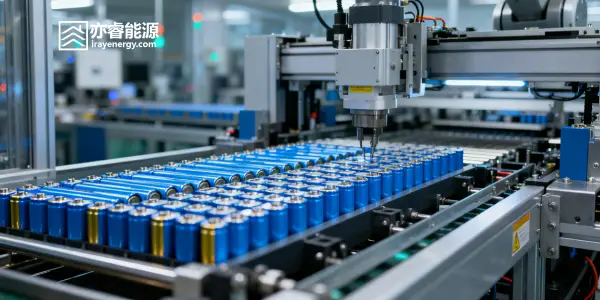
The commercialization of lithium-ion batteries was not the end of technological progress, but rather the beginning of a new wave of innovation. As market demand continued to grow, research efforts gradually shifted toward increasing energy density, extending service life, improving safety, and optimizing manufacturing processes.
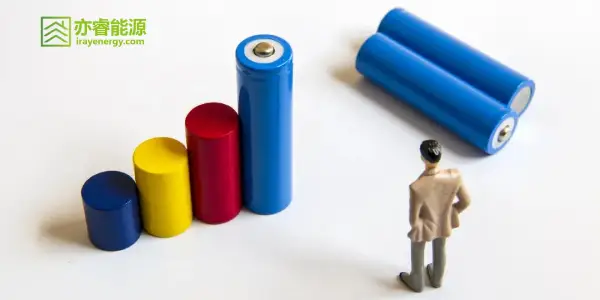
Taking the widely used 18650 cylindrical lithium-ion battery as an example, early products in 1991 had a capacity of approximately 900 mAh. Today, with essentially the same form factor, capacities have increased to more than 2500 mAh. This remarkable improvement is the result of continuous optimization of cathode and anode materials, electrolyte systems, and production technologies.
Overall, the birth and development of lithium-ion batteries represent one of the most influential achievements in battery technology over the past several decades. They have not only profoundly transformed the consumer electronics industry, but also provided essential support for the advancement of electric vehicles and energy storage systems. With the ongoing emergence of new materials and technologies, lithium-ion batteries will continue to evolve and play an increasingly important role in the future energy landscape.