Lithium Iron Phosphate vs. Ternary Lithium: How to Choose the Right Battery
In the fields of energy storage and new energy vehicles, you often hear the names “Lithium Iron Phosphate (LiFePO4)” and “Ternary Lithium (NCM/NCA).” Although both are lithium-ion batteries, their application scenarios and performance characteristics are quite different. Today, we’ll provide a systematic overview to help you easily understand the advantages and suitable use cases of each battery type.
1. Basic Classification of Lithium-Ion Batteries
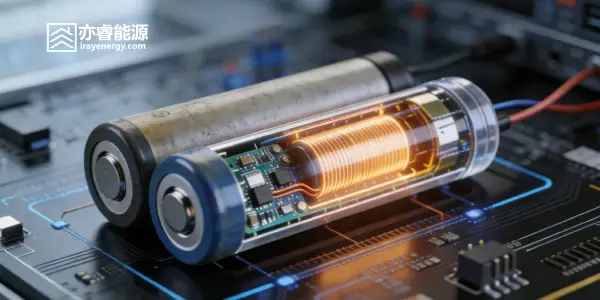
Lithium-ion batteries can be classified by shape into three types: cylindrical, prismatic (hard case), and pouch. Among them, prismatic batteries have clear advantages in production, assembly, and system integration, which is why they are the most widely used in China’s energy storage market.
From a usage perspective, batteries can also be divided into two categories: energy-type and power-type. Energy-type batteries are mainly used for long-duration energy release, such as peak-shaving energy storage, typically lasting no less than 2 hours. Power-type batteries, on the other hand, aim to provide high current for a short time, such as for frequency regulation or emergency control, usually lasting less than half an hour. Simply put, energy-type batteries “last long,” while power-type batteries “deliver strong bursts.” For more on battery rate, you can refer to our article “How to Quickly Identify Battery C-Rates.”
Although the current standard GB/T 36276-2023 no longer distinguishes between these two types, this classification is still helpful for understanding practical battery applications.
From a material perspective, the cathode material is the core of lithium-ion batteries. The two most widely used types in the market are Lithium Iron Phosphate (LiFePO4) and Ternary Lithium (NCM/NCA). Other chemistries, such as Lithium Manganese Iron Phosphate, are gradually emerging but currently account for a smaller market share.
2. Characteristics of Lithium Iron Phosphate Batteries
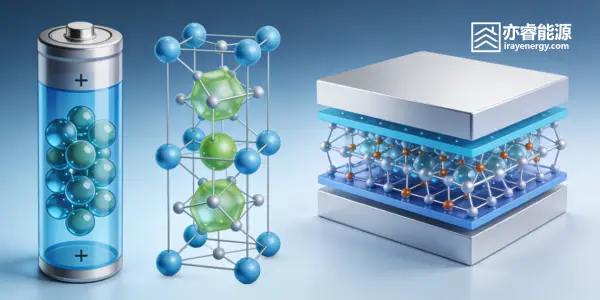
LiFePO4 batteries use LiFePO4 as the cathode material. This material has an olivine crystal structure, forming LiO6 octahedra, FeO6 octahedra, and PO4 tetrahedra. While this sounds complex, the key point is that the material’s structure is very stable and does not easily deform during charge and discharge cycles.
Advantages:
High Safety: LiFePO4 has excellent thermal stability, making it less prone to safety incidents under high temperatures or overcharge. This is why it is preferred for energy storage and commercial vehicles.
Long Lifespan: Its stable structure means minimal degradation over repeated cycles, with cycle life exceeding 3,000 times, essentially lasting a decade.
Low Cost and Eco-Friendly: The materials are abundant, non-toxic, and environmentally friendly, making LiFePO4 batteries more economical compared to ternary lithium.
Stable Electrochemical Performance: They have a flat charge-discharge voltage platform and stable output, ideal for large-scale energy storage and mid-to-low-end vehicles.
Disadvantages:
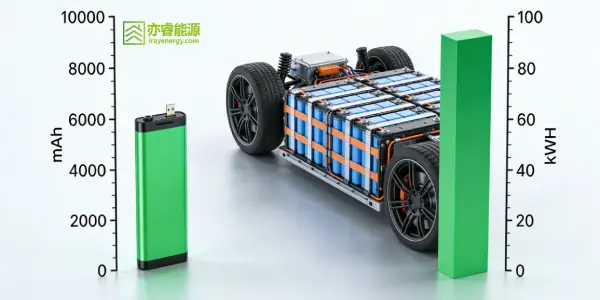
Lower Energy Density: LiFePO4 batteries store less energy per unit weight or volume than ternary lithium, resulting in slightly shorter range for the same volume.
Limited Low-Temperature Performance: Their discharge capability drops in cold environments, which can be noticeable in EVs during winter.
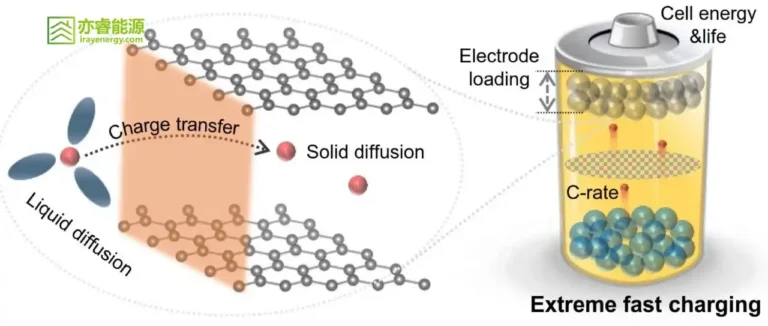
Restricted High-Rate Performance: Due to low electronic conductivity and tap density, their performance under high current discharge is somewhat limited, although material optimizations are improving this.
In summary, LiFePO4 batteries, with their safety, long life, and cost advantages, have become the standard in energy storage and commercial vehicles and are increasingly used in mid-to-low-end electric cars.
3. Characteristics of Ternary Lithium Batteries
Ternary lithium batteries mainly include Nickel Cobalt Manganese (NCM) and Nickel Cobalt Aluminum (NCA). They use a layered crystal structure, with nickel providing energy density, cobalt enhancing conductivity, and manganese or aluminum improving structural stability.
Advantages:
High Energy Density: Ternary lithium batteries store more energy per unit volume or weight, making them ideal for vehicles requiring long range.
Good Low-Temperature Performance: They maintain better discharge capability in cold environments, which is important for northern regions or winter driving.
Disadvantages:
Lower Safety: Their layered structure has lower thermal stability than LiFePO4, making them more susceptible to thermal runaway under high temperature or overcharge. An effective battery management system (BMS) is required for safety.
Higher Cost: Nickel and cobalt are expensive, making ternary lithium batteries significantly more costly than LiFePO4.
Shorter Lifespan: Cycle life is generally 1,000–2,000 cycles, necessitating more frequent replacement or management.
Thus, ternary lithium batteries are better suited for high-end EVs and devices that require high energy density, but they demand careful attention to safety and cost management.
4. How to Choose the Right Battery System
In short:
If you prioritize safety, durability, and cost-effectiveness, and your range requirements are not extreme, LiFePO4 is an excellent choice—especially for energy storage systems, logistics vehicles, buses, and mid-to-low-end passenger cars.
If you require long range, lightweight design, and good low-temperature performance, and can accept higher costs and safety management, ternary lithium batteries are the better option—particularly for high-end EVs and high-performance portable devices.
In the future, with ongoing material and process optimization, the performance gap between these two battery systems may further narrow. LiFePO4 will get closer to ternary lithium in energy density and low-temperature performance, while ternary lithium safety will improve through technological measures.
In conclusion, both LiFePO4 and ternary lithium have their merits. There is no absolute “better” choice; it all depends on your specific application and needs. Understanding their characteristics allows you to select the most suitable battery solution.