mAh and kWh can both measure battery capacity — but what’s the real difference?
When it comes to battery capacity, we almost always encounter two units:
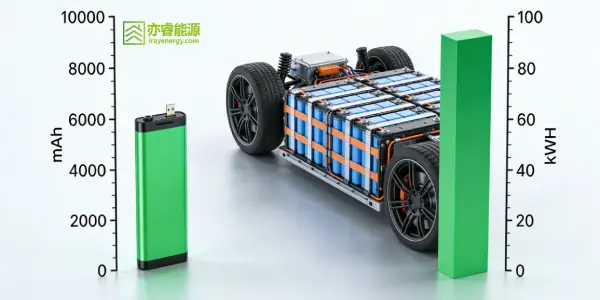
one is mAh, commonly seen in consumer electronics like smartphones,
and the other is kWh, or even MWh, frequently mentioned in energy storage systems and electric vehicles.
They both describe batteries, so why do consumer electronics use mAh, while energy storage systems almost exclusively talk about kWh?
This is not just a matter of “using a different unit.”
It reflects fundamentally different application scenarios and engineering priorities.
Below, we’ll systematically explain the differences between mAh and kWh from three perspectives:
definitions, conversion relationship, and real-world applications.
1. What do mAh and kWh represent?
1.1 What is mAh?
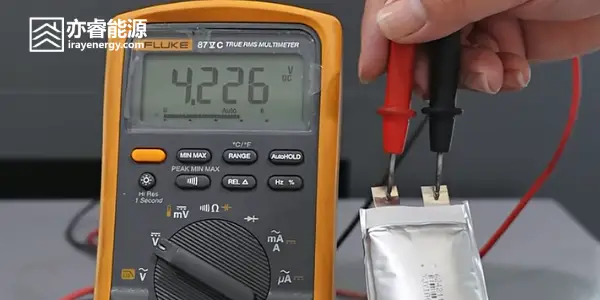
mAh (milliampere-hour) is one of the most common battery capacity units.
Essentially, it represents how much electric charge a battery can deliver over time.
Literally speaking:
1 mAh = supplying 1 milliampere of current for 1 hour
Its core meaning is:
👉 Describes how much current a battery can output and for how long
👉 Focuses more on the concept of charge quantity
Example:
A 5000 mAh smartphone battery can be understood as:
If the phone operates at 1000 mA, it can theoretically run for 5 hours.
This is why consumer electronics such as smartphones, Bluetooth earphones, and tablets commonly use mAh:
Operating voltage is relatively fixed
Power consumption is relatively stable
Battery size is small
Under these conditions, mAh is intuitive and sufficient.
1.2 What is kWh?
kWh (kilowatt-hour) is an energy unit, not just a measure of charge.
It represents how much energy is consumed or stored when a device operates at a certain power for a certain time.
Breaking it down:
1 kWh = operating at 1 kW of power for 1 hour
Its core focus is:
👉 How much real work the battery can do
👉 Emphasizes actual energy output capability
That’s why kWh is commonly used in:
Electric vehicles
Residential and commercial energy storage systems
Solar and grid-side energy storage
These systems care less about current magnitude and more about:
👉 How far a vehicle can drive
👉 How long a home or facility can be powered
2. What is the relationship between mAh and kWh?
Although one focuses on charge and the other on energy, they are closely related.
As long as the battery voltage (V) is known, they can be directly converted:
Energy (kWh) = Capacity (mAh) × Voltage (V) ÷ 1,000,000
Example:
A typical smartphone battery has:
Capacity: 5000 mAh
Nominal voltage: 3.7 V
Its energy is: 5000 × 3.7 ÷ 1,000,000 ≈ 0.0185 kWh
You’ll notice that:
👉 The kWh value of a phone battery is extremely small
👉 Using kWh would actually be less intuitive
This is exactly why consumer electronics rarely label batteries in kWh.
3. Why do different devices use different units?
3.1 mAh is better suited for small electronic devices
For smartphones and wearables:
Voltage is essentially fixed
Operating conditions are stable
Users mainly care about “how long it lasts”
In these cases, mAh already reflects battery life well enough,
and there’s no need to complicate things.
3.2 kWh is better suited for energy storage and high-power systems
In electric vehicles and energy storage systems:
Batteries consist of large numbers of cells in series and parallel
System voltage varies widely
Load power spans a very large range
In such cases, talking only about mAh becomes meaningless.
kWh directly tells you:
👉 How much usable energy the system stores
👉 How long it can support a certain power output
Whether you’re calculating electricity costs, economic returns, or driving range,
kWh is a more universal and engineering-oriented language.
4. Summary
mAh: Emphasizes charge capacity, suitable for low-power, fixed-voltage consumer electronics
kWh: Emphasizes actual energy, suitable for high-power and complex energy storage systems
At their core, both units describe the same battery, just from different perspectives.
Using the right unit for the right scenario is what defines a professional approach.
If you work across both consumer electronics and energy storage fields, you’ll notice:
👉 A change in units actually reflects a change in application logic.