The Art of Contradiction and Balance in Battery R&D
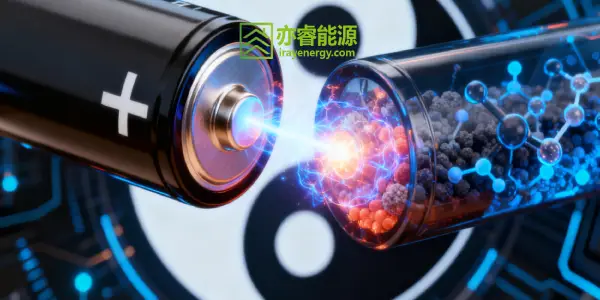
In the field of battery R&D, the process is filled with the art of opposition and balance. Just as yin and yang coexist and depend on each other in nature, numerous parameters within a battery system often stand in opposition and mutual constraint. Energy and safety, capacity and lifespan, efficiency and yield — these conflicting pairs form the very soul of cell design. They make battery engineers both struggle and reflect amid trade-offs, yet it is precisely these opposing beauties that make the exploration of battery technology endlessly fascinating.
I. Energy Density and Cell Performance: The Struggle Between Fish and Bear’s Paw
Among all battery design parameters, energy density is undoubtedly one of the most crucial indicators. It determines a product’s endurance, size, and weight — and is the key to a company’s competitiveness. However, as energy density continues to rise, cell performance often has to make compromises.
High-energy-density designs require thinner separators, higher electrode compaction density, and extreme coating thickness. The side effects of this “extreme pursuit” are obvious: poor electrolyte absorption, hindered ion transport, accelerated capacity fading, and heightened safety risks. For instance, in pursuit of 300 Wh/kg energy density, manufacturers often must sacrifice part of the cycle life or make concessions in thermal stability.
From an industry perspective, balancing energy density and cycle performance is the most classic — and most difficult — question in cell design. Only by finding the right balance between safety and energy can a product achieve both competitiveness and reliability.
II. Electrolyte Injection and Processability: The Tug of Liquid and Structure
In pouch cell manufacturing, electrolyte injection volume is another focal point of conflicting interests. Theoretically, increasing the amount of electrolyte improves wetting, lowers internal resistance, and enhances cycle life. However, from a production standpoint, excessive injection can cause a series of process challenges:
Difficulty in vacuum absorption and longer soaking times;
Risk of bursting during hot or cold pressing;
Incomplete degassing, leading to weak sealing or leakage;
Bulging and deformation of the cell pouch.
Ideally, engineers optimize the process window through equipment upgrades, pressure rate control, or extended resting time. Yet when these methods reach their limits, reality must be faced — reduce the electrolyte amount, and compensate for performance loss through improved material systems or separator wettability.
Battery manufacturing is, in essence, a constant search for the “optimal midpoint.” When both fish and bear’s paw cannot be had, upper-level decisions must clarify priorities — whether to pursue performance or production stability.
III. Production Efficiency and Product Yield: The Trade-off Between Speed and Quality
Production efficiency is the soul of manufacturing, while product yield is the lifeline of a company — and the two are rarely compatible.
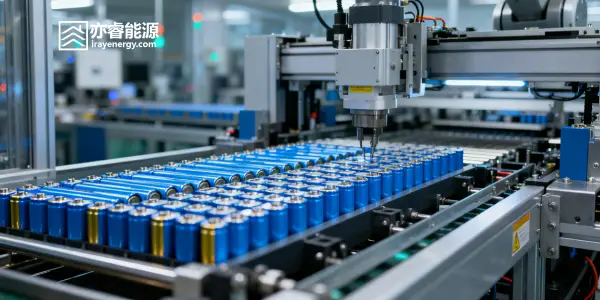
In practice, to boost efficiency, engineers tend to shorten process times and increase equipment throughput. Yet many quality issues stem precisely from “insufficient time”:
Excessive coating speed causes cracking;
Rapid winding leads to cell deformation;
Overly fast formation rates result in unstable SEI layers;
Insufficient baking time leaves high residual moisture in electrodes.
Almost all of these problems can be solved by sacrificing speed and allowing more time. Time acts as a “stabilizer,” enabling fuller reactions, more stable structures, and better process control.
Therefore, when efficiency and yield collide, yield must take precedence. On the production line, every decision to improve yield may come at the cost of slower cycle time and higher labor hours — yet only in this way can consistency and reliability be truly ensured. Mature engineering management is not about blindly chasing speed but about establishing a dynamic balance between speed and quality.
IV. Negative Electrode Capacity and Expansion: The Price of High Capacity
In material systems, the choice of anode material has always been a key factor in improving energy density. The emergence of silicon-based materials brought a revolutionary leap — their theoretical capacity is nearly ten times that of graphite. However, their greatest problem comes with it: expansion.
During charge and discharge, lithium ions insert into the silicon lattice, causing volume changes of over 300%. This expansion leads to electrode pulverization, breakage of conductive networks, accelerated electrolyte decomposition, and rapid cycle degradation. In contrast, graphite, though lower in capacity, offers structural stability and long cycle life.
The adoption of silicon-based anodes epitomizes the contradiction between “capacity” and “stability.” Engineers try to mitigate the issue through carbon coating, nanostructuring, and composite designs; however, achieving both high capacity and long cycle life remains a major challenge. In the future, with breakthroughs in new materials and architectures, this contradiction may gradually reach a new equilibrium.
V. Cathode Energy and Safety: The Conflict Between Activity and Stability
“The higher the material’s energy, the less safe it becomes.” This seemingly paradoxical statement actually reveals a fundamental law of cathode design.
Take lithium cobalt oxide as an example: at high charge voltages, excessive delithiation causes drastic structural changes — the CoO₂ layers weaken in bonding, reducing thermal stability. Meanwhile, the high-valent Co⁴⁺ species exhibit strong oxidizing power, further increasing safety risks. In contrast, lithium iron phosphate, with its stable phosphate framework, maintains good structural integrity even when fully charged, giving it far superior safety compared with high-nickel systems.
Thus arises a natural opposition between energy density and safety. LiCoO₂ and high-nickel NCM materials provide high energy but entail greater risks; LFP offers high safety but lower energy. Different applications demand different priorities — consumer electronics favor high-energy materials, while energy storage and power tools emphasize safety and longevity.
The choice between them is not merely technical — it is a strategic one.
VI. Unity Within Contradiction: The Philosophy of Battery Design
Battery design is an art of balance. Materials, structures, processes, performance, and safety — each aspect presents its own opposition yet supports the others. An excellent cell is not one that pushes every parameter to the extreme, but one that achieves optimal synergy among contradictions.
In cell development, every “trade-off” is not a flaw, but a scientific inevitability. True engineering wisdom lies not in eliminating contradictions, but in managing and leveraging them.
Future battery technologies may expand the “coexistence space” of these opposing factors through new materials, processes, and architectures. Yet no matter how technology evolves, the core philosophy of battery design will remain unchanged — to seek balance within opposition and to pursue optimization amid contradiction.
Conclusion
The charm of the battery industry lies precisely in its imperfection. Behind every parameter hides a story of compromise and philosophy. Energy and safety, efficiency and quality, performance and cost — these interwoven contradictions make up the entirety of battery technology.
When engineers learn to make graceful trade-offs between these opposing forces — using data and reason to tame contradictions — only then can battery technology truly advance toward maturity and excellence.